
Structure-Based Stop-Loss: The Smartest Way to Place Stops Using Price Action Levels
A stop-loss placed randomly is a stop-loss guaranteed to fail. Most retail traders place stop-loss levels based on what they feel is safe, not where the market structure proves it is safe. That is exactly why their stop-losses get hunted, triggered early, and destroyed before the real move begins.
Structure-based stop-loss uses key market levels such as swing highs, swing lows, support, and resistance to determine logical stop placement. It positions the stop beyond natural price turning zones, making it harder for short-term volatility or manipulative spikes to hit prematurely.
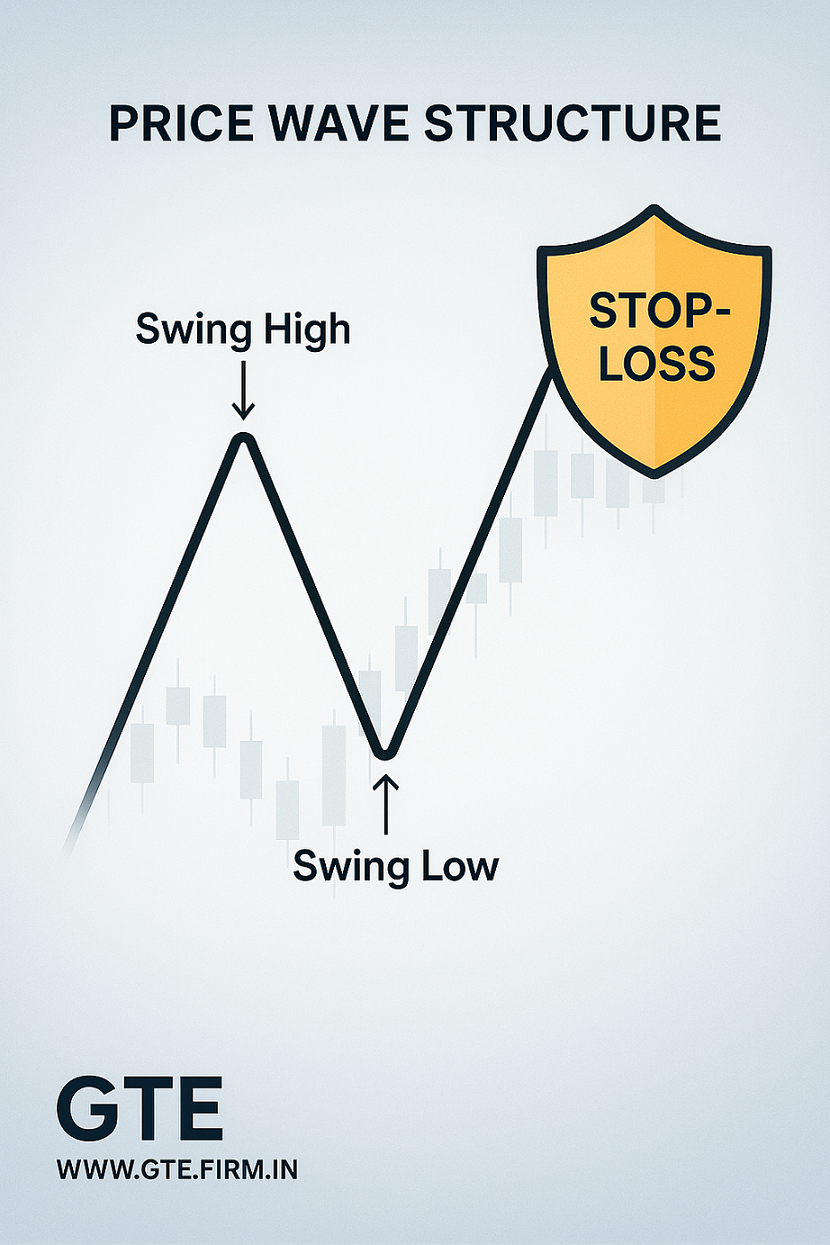
Why Structure-Based Stop-Loss Is More Reliable Than Fixed or Random Stops
Institutions trade based on structure — not guesses. Smart money uses historical levels, supply-demand zones, and swing turning points to place exits. Retail traders do the opposite and lose.
- Positioning stops beyond obvious levels reduces fake-out losses
- Price structure provides logical invalidation points
- Works across intraday, swing, and long-term charts
- Protects trades from stop-hunting behaviour
- Creates confidence in holding winners
Trading without structure is gambling. Trading with structure is professional execution.
Real Example: BANKNIFTY Swing High Stop-Loss
Asset: BANKNIFTY Futures
Entry: 47,880 short
Previous Swing High: 48,020
Structure-Based Stop-Loss: 48,030 (10 points buffer above structure)
| Stop Type | Exit Level | Result |
|---|---|---|
| Random Fixed SL | 47,950 | Hit early → Trade lost before reversal |
| Structure-Based SL | 48,030 | Held → Captured full breakdown to 47,350 |
Outcome difference: +₹26,500 profit instead of a loss, simply from smart stop placement beyond the swing high.
Price structure tells the truth. Your emotions don’t.
When Structure-Based SL Works Best
- Breakout trading (support/resistance break)
- Trend continuation pullbacks
- Reversal setups near extreme levels
- Multi-timeframe confirmation trading
- Institutional volume zones
The strongest stop-loss levels are not based on numbers — they are based on market psychology and liquidity.
The Biggest Mistakes Traders Make With Structure-Based SL
- Placing stops exactly on support or resistance instead of beyond it
- Using small buffers due to fear of risk
- Ignoring volume and swing points
- Entering trades too late and forcing narrow stops
A stop placed in the wrong location gives the illusion of discipline while guaranteeing failure.
Inline Concept Image: Structure-Based Stop-Loss Visual
The market tests levels before moving. A stop-loss placed directly on the level is bait. A stop-loss placed beyond structure is protection.
Why Automation Makes Structure-Based SL More Powerful
| Manual Execution | Automated Execution |
|---|---|
| Late placement after impulse | Instant positioning based on real-time structure |
| Moving SL due to fear | Permanent rule-based enforcement |
| Missed re-entries | Automated trailing beyond new swing |
| Emotional interference | Zero emotion — pure logic |
Humans panic near levels. Algorithms protect capital with precision.
Final Punch
Stop placing stop-losses where you feel safe. Place them where the market proves they are safe.
Call or WhatsApp us today, or fill the contact form at https://www.gte.firm.in/wp/contact/ to automate structure-based stop-loss execution and trade like a professional.
FAQs
Should every trade use structure-based stop-loss?
Yes, especially in volatile assets like BankNIFTY, crude oil, gold, and USD-INR.
Is structure-based SL better than fixed SL?
Yes. It respects market logic and improves strike rates dramatically.
Can structure-based stop-loss be automated?
Yes. Algorithms detect swing highs/lows and adjust automatically.