
Stop-Loss Using Options Hedge: How Professionals Reduce Risk Without Exiting Positions
Most retail traders believe that the only way to control loss is by placing a stop-loss order. But professional traders, prop-level systems, and institutional desks often use a far more powerful method: hedging the position using options instead of exiting it. This protects the trade from sudden volatility while keeping the original position active and profitable if the trend resumes.
Options hedge stop-loss allows a trader to stay in a position even when price temporarily moves against them, reducing drawdown and psychological pressure. Instead of closing the trade, they neutralize risk using a hedge and wait for confirmation instead of panic exiting.
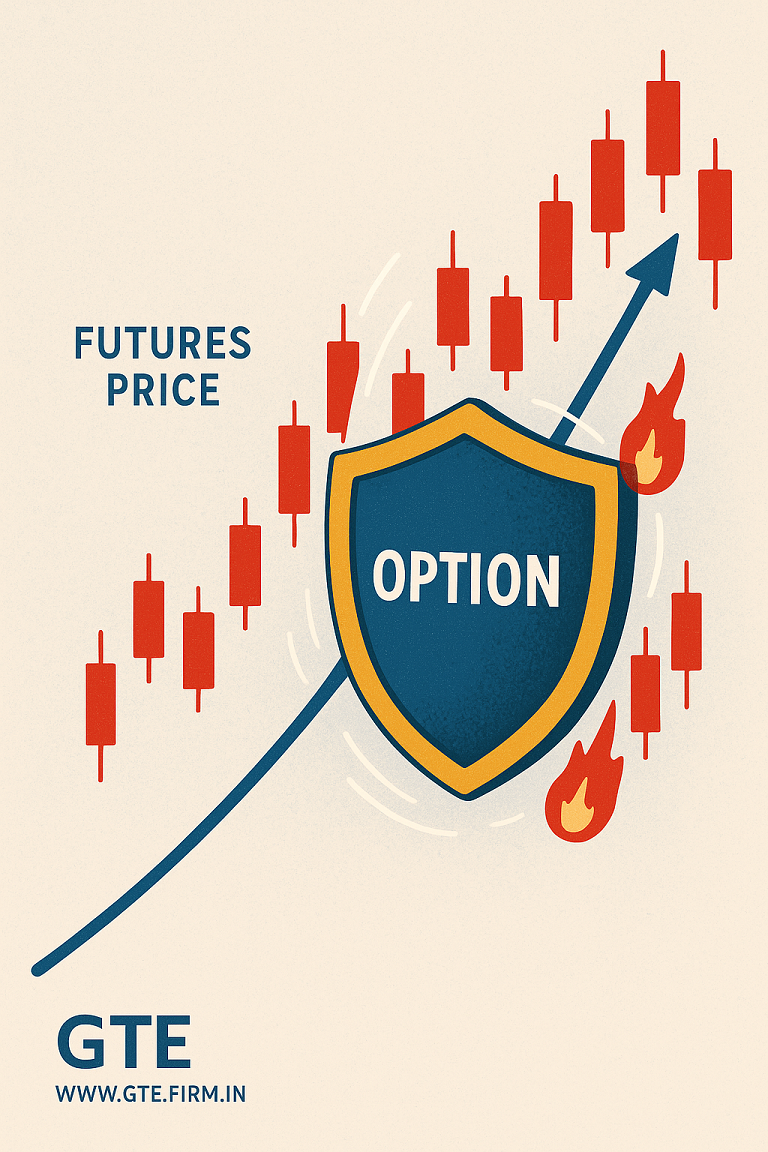
Why Hedge-Based Stop-Loss Beats Traditional Stop-Loss in Volatile Markets
In high-volatility assets like BankNIFTY, NIFTY, Crude Oil, Gold, and USDINR, stop-losses get hunted frequently. Sharp wicks, news-driven spikes, and liquidity traps hit stops before continuing the original trend. Retail traders get thrown out while institutions continue riding the move.
- Stay in the trade even during temporary reversals
- Reduce emotional stress and decision paralysis
- Convert uncertain zones into controlled risk periods
- Protect capital without giving up profitable entries
- Work with trends instead of fighting volatility
This is why professionals hedge. They don’t get shaken out during temporary price manipulation.
Real Example: BANKNIFTY Futures + Options Hedge
Position: Long BankNIFTY Futures at 47,350
Volatility Spike Expected: News event approaching
| Approach | Action | Outcome |
|---|---|---|
| Traditional Stop-Loss | Stop at 47,200 hit by spike | Exit with ₹3,750 loss, missed 400-point rally |
| Options Hedge Stop-Loss | Buy 47,200 PE hedge | Risk capped, stayed in trade, captured full rally to 47,750 |
Net Difference: Profit retained instead of forced exit.
Pros don’t quit positions under pressure. They neutralize risk and let the market prove direction.
When Hedged Stop-Loss Works Best
- Ahead of major economic announcements
- During volatility spikes and uncertainty zones
- During breakouts that pull back sharply before continuation
- For swing and positional futures trading
- For large leveraged positions where exit is expensive
Options hedge is insurance. It buys safety and time.
Common Mistakes Traders Make Without Hedge-Based Stop-Loss
- Panic exiting during volatility wicks
- Entering again at a worse price and compounding losses
- Letting fear replace logic
- Missing trend legs due to early stop-outs
The cost of losing a golden position is much higher than the cost of an affordable hedge.
Inline Visual — Hedged Stop-Loss Concept
A hedge reduces risk exposure while keeping the position alive, preventing unnecessary exits while trends develop fully.
Automation Makes Hedge-Based Stop-Loss Far More Powerful
| Manual Hedge | Automated Hedge |
|---|---|
| Slow reaction during news or spikes | Instant execution based on volatility triggers |
| Emotion-driven errors | Zero emotional interference |
| Bad strike selection under stress | Rule-based optimal hedge choice |
| Missed timing | Perfect timing via real-time scans |
Humans react slowly. Algorithms build protection instantly.
Final Reality Check
Stop-loss does not always mean exit. Sometimes the best decision is to hedge instead of running away.
Call or WhatsApp us today, or fill the contact form at https://www.gte.firm.in/wp/contact/ to automate options hedge stop-loss execution and trade professionally.
FAQs
Is options hedging cheaper than taking a full loss?
Yes. A small hedge cost can save large capital losses and preserve trend gains.
Can hedge stop-loss be automated?
Yes. Algo systems hedge dynamically based on volatility and price triggers.
Which segments benefit most from hedging?
Futures trading in BankNIFTY, NIFTY, Crude, Gold, and Currency.